About Mountain Light Santuary and Rainbow Valley Vision
Mission & Vision
Born from the legacy of Mountain Light Sanctuary, RVV was created to honor and expand the dream of sacred land held in trust for the collective. What began as a quiet mountain refuge has blossomed into a living, breathing community — one that welcomes those who walk gently, listen deeply, and live with care.
Rainbow Valley Vision is a 501(c)(3) nonprofit devoted to sacred stewardship. We nurture the living Earth while offering sanctuary for those seeking renewal, community, and deeper connection to the more-than-human world. Our vision is one of harmony: people and the planet thriving together in reverence and reciprocity.
Our Values & Agreements
We are a sober, inclusive, and heart-led community. Mutual respect, shared responsibility, and reverence for the land guide how we live and grow together. Every guest, member, and resident participates in the circle of stewardship that keeps this sanctuary alive.
Membership Agreements of MLS
Private Retreat Agreements of MLS
Work Trade Agreements of MLS
Resident Agreements of MLS
Mountain Light’s Origin
Campfires, Communities, and a Call to Asheville (1990–1992)
Our story begins in a cornfield at the foot of a Hopi mesa in northern Arizona in the autumn of 1990. I was traveling with friends who were accompanying me on a journey through the southwest with Willaru Huyata, an Incan spiritual teacher I had brought from Peru to travel and teach. As we were sitting around the campfire in the evening, Valerie said “why don’t you guys come to Asheville and let’s start an intentional community?” Naively we said, “that’s a great idea.”
The Asheville Move
Fast forward to September of 1992: I moved from Nashville, Tennessee, and Bonita moved from Alabama. We shared a house rented from Val in Asheville. At the time, Douglas was not able to join us. With Val’s leadership, regular meetings were initiated, bringing together others interested in community. Gradually, I came to realize that I really didn’t want to live in a commune-type situation. My focus was elsewhere. I needed time alone and not the drama of multiple relationships.
From EarthHaven to Pisgah: First Encounters with the Cove
That said, the group continued to meet and eventually gave birth to EarthHaven Eco Village, a community of 100 people on 350 acres near Black Mountain, North Carolina.
A Newspaper Article Sparks Curiosity
In the autumn of ’92, an article appeared in the Sunday newspaper titled “You Can Visit The Places Where The Last Of The Mohicans Was Filmed.” Included was mention of a riding stable offering trips into an old growth forest in a little-known section of Pisgah National Forest near Barnardsville. The mention of the forest caught my attention.
First Ride into the Forest
The following April, for my youngest daughter’s 18th birthday, we went riding into that forest with a guide. As we exited the trail, there was an old, dilapidated log-and-board bridge crossing the creek to private property. Curious, I asked our guide, “Who lives over there?” She responded, “You don’t want to go over there. Those folks are the real McCoys. They don’t even have indoor toilets.”
The Other Side of the Bridge
Seeing the House from Afar
Later, I learned the cove had a bad reputation—so much so that the sheriff reportedly didn’t even want to cross that bridge. Of course, this only heightened my curiosity. The area was beyond beautiful, and I found myself returning each weekend to hike, always passing the old house on the other side of the creek.
Crossing Over
Then one day, I saw a “For Sale” sign near the bridge, giving me an excuse to finally cross. I found a very dilapidated house, an old couple on the front porch, and two naked toddlers playing in the yard. I didn’t go inside, but from the outside, I couldn’t imagine living there. It was soon purchased by a teacher from South Carolina as a weekend getaway.
Knowing It Was Home (1995)
Gathering Signs and Symbols
I kept returning on weekends, and though the house saw occasional use, it was mostly unoccupied. Then in the autumn of 1995, after an incident with my landlord, I decided to move. Over the past year, I had done my homework. I’d found a small round stone in the creek, had it wire-wrapped, and wore it as a necklace—symbolically keeping the land close to my heart.
The Parcel That Spoke to Me
I had also collected property maps, tax records, and photos. One particular parcel—at the end of the lane, surrounded on three sides by national forest—stood out. Looking at it across a closed gate, everything in me said, “You are home.” After traveling the world, I had finally found home.
Moving In and Starting the Journey
I called the owner of the old house. “Is the house for rent?” I asked. He hesitated, mentioning past tenants hadn’t worked out. But when I mentioned it was something of a Thoreau experience for me, he understood and invited me to meet him that weekend. The visit went well, and I moved in on October 1, 1995.
He had done some cleanup—hauling away 16 pickup loads of debris—but the roof still leaked, and everything was constantly damp. Clothes would mildew in the closet. But it was autumn, the trees were brilliant, and I was in heaven.
Following Guidance and Purchasing the Land
By December, he decided to sell. They had bought it as a getaway, but only worked when they visited. It wasn’t the parcel I originally wanted—it had no buildings, and I had no money. I asked Guidance: “Should I buy this house and its one and a half acres?” The answer: a definite yes—“this is the heart of the cove, and you should start with the heart.”
I was able to borrow the $10,000 down payment, and the monthly payments matched my previous rent. The adventure began.
Early Challenges and First Projects (1995–1999)
Living Conditions and Winter Survival
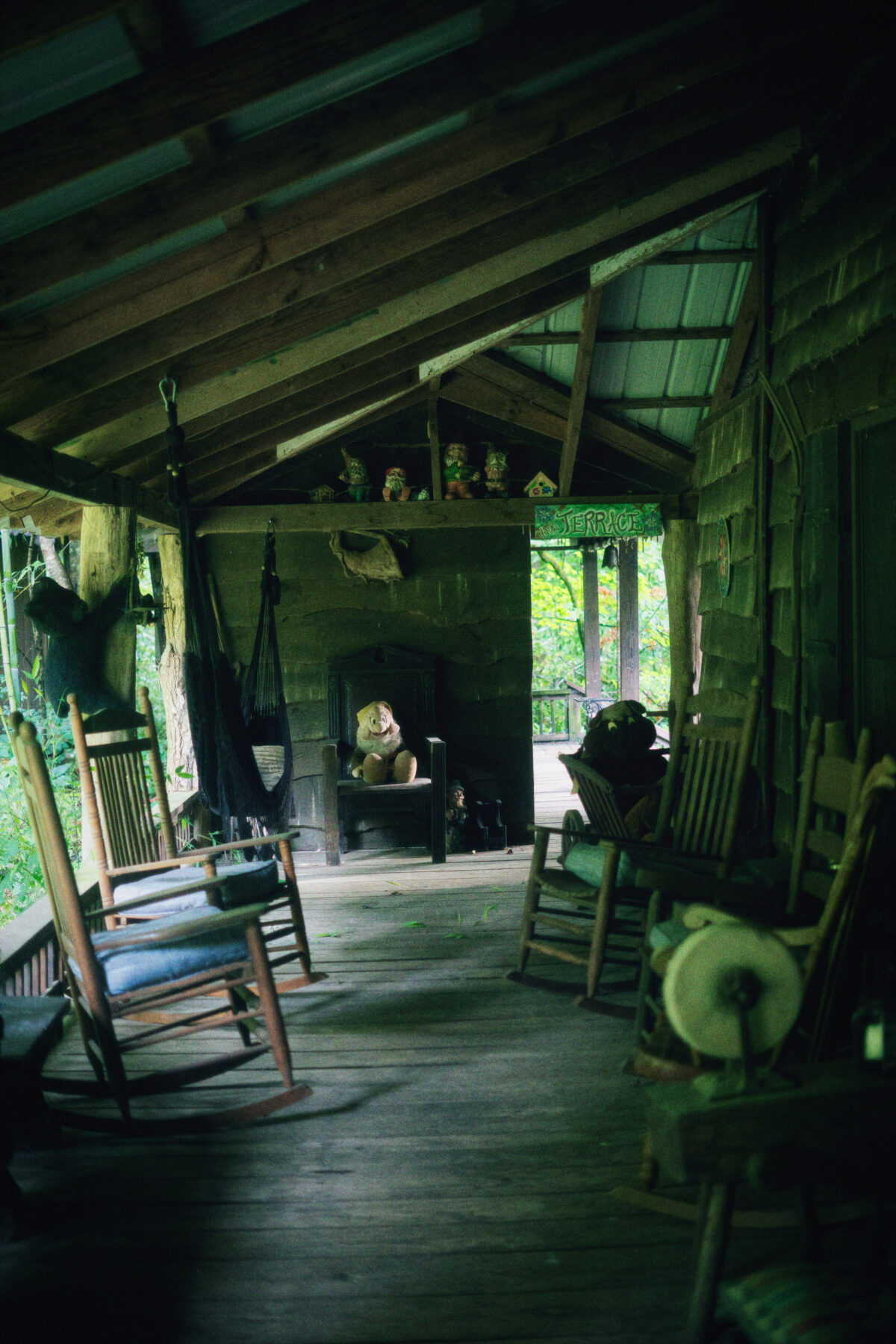
The house was in serious need of repair, and winters were especially hard. The only heat was a wood stove, which I had no experience using. The firewood was often wet. The cold, rainy days were the hardest. My first priority was a covered porch, which was built within a couple of years. A sun deck followed soon after.
Turning Ugliness into Beauty
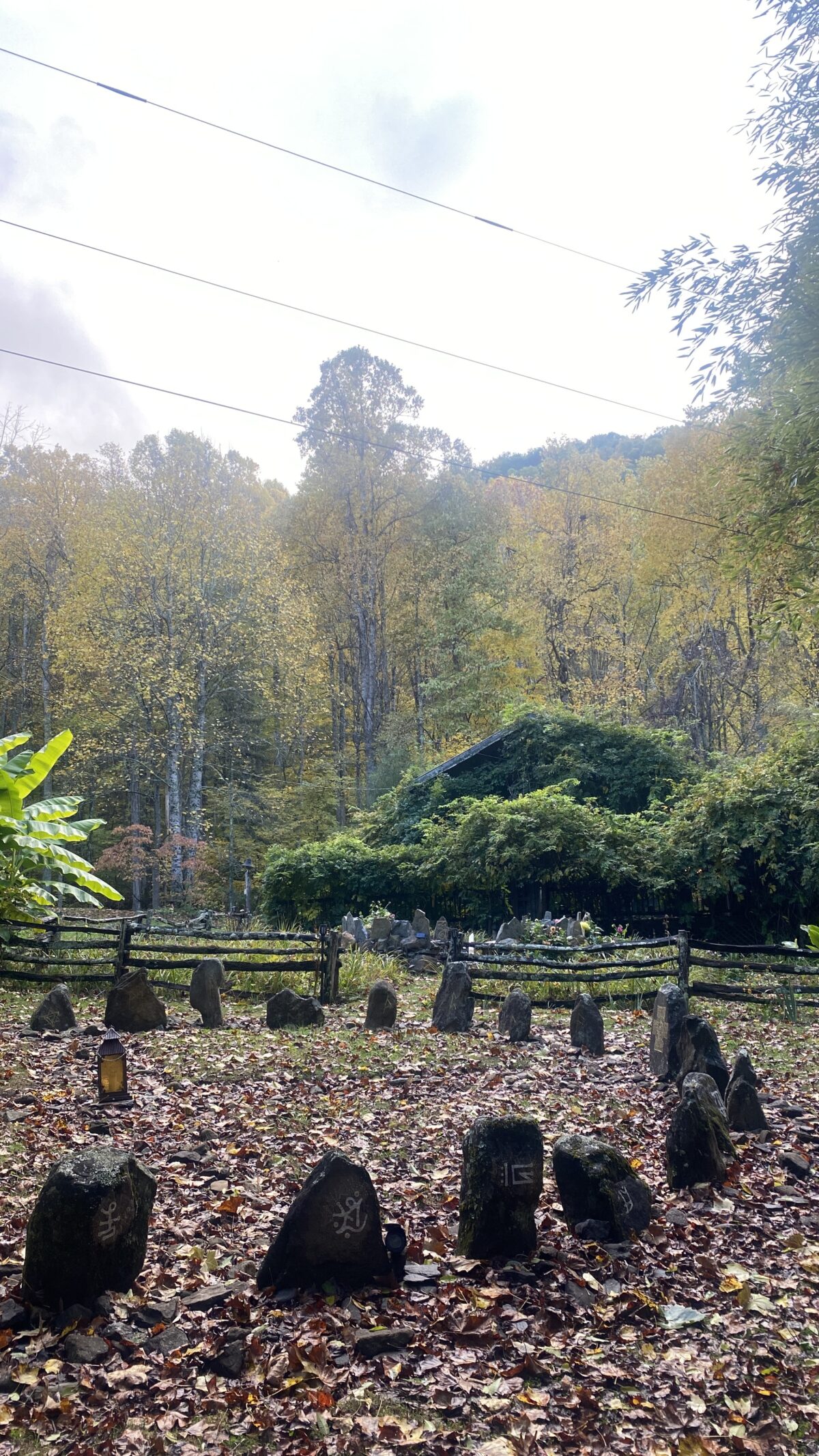
When I had money, I built. When I didn’t, I landscaped. In 1997, I built the stone circle—after uprooting mower-destroying boulders scattered around the property. Two garbage heap zones were cleared and transformed—one into the Grotto of the Divine Feminine, the other into the Japanese Garden. I found real joy in turning ugliness into beauty.
Building the Sanctuary (1999–2014)
Structures Take Shape
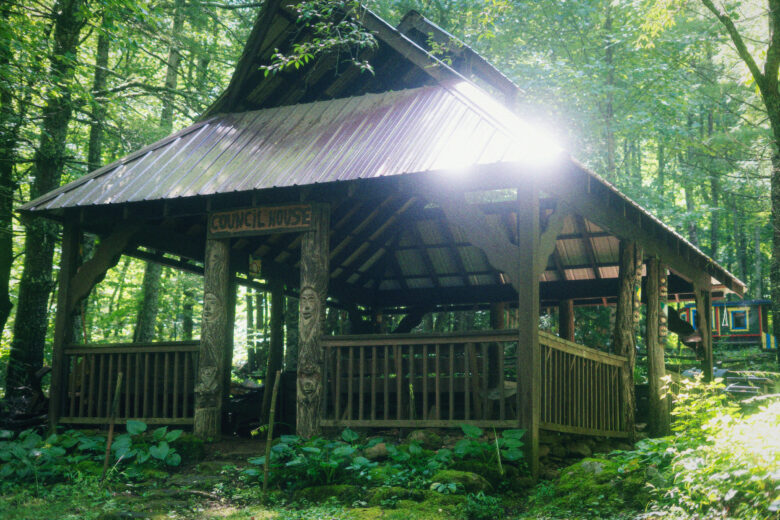
The first structure was the Hermitage (1999), then three versions of the Treehouse, the Balihouse, Frodos (2012), and the ZenTao. In 2011, I acquired another 1.5 acres, which included the upper parking area and future sites of the Banana Patch, Enchantment, Narnia, and the Council House.
The 10-Acre Expansion
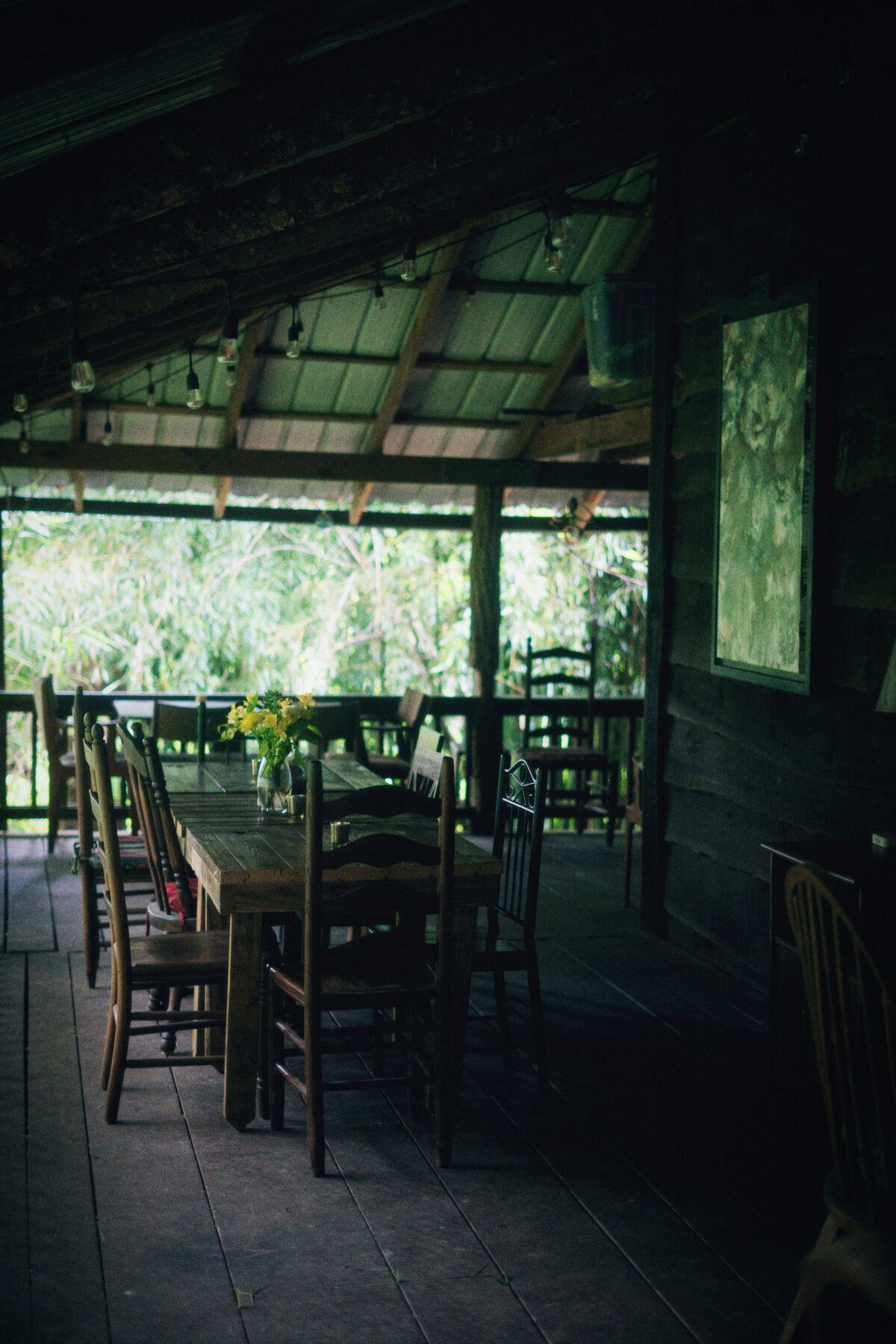
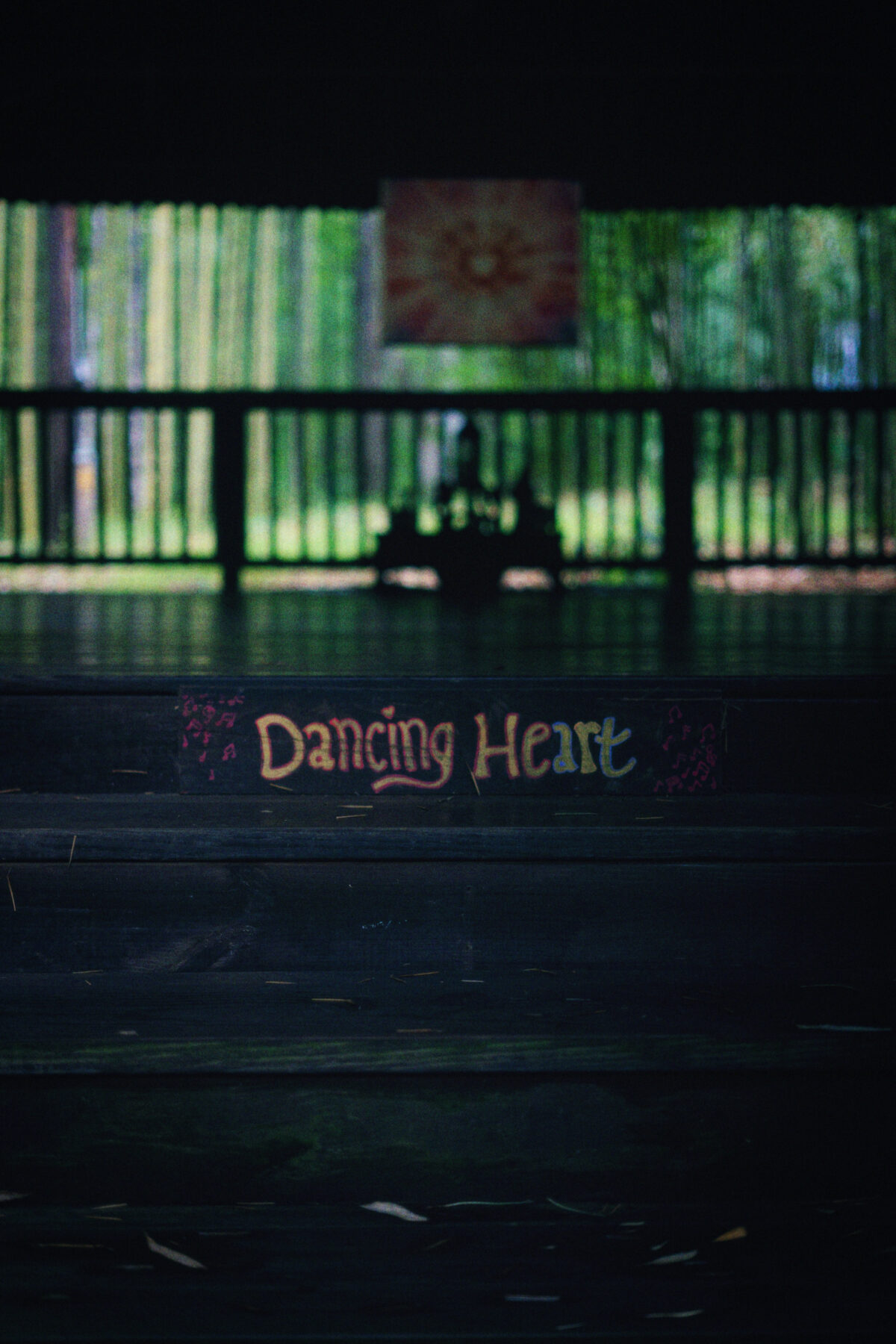
In 2014, I acquired another ten acres—home to Rivendell, Middle Earth, and the Gypsy Wagon. This parcel also included an unused hillside of eight acres above the Sanctuary. Along the way, we added a sauna (later replaced by Amitabah), and the second story of the porch became GardenView. Then came the Council House and Dancing Heart Pavilion.
Final Expansions and the Ongoing Journey (2019–2022)
The last parcel acquired was a three-quarter-acre lot on the west side of the property in 2019. Kwan Yin, the massage hut, was the first structure built beside the river, followed by the sauna (2020), Trollbane, and Neverland (2021).
Living Landscape
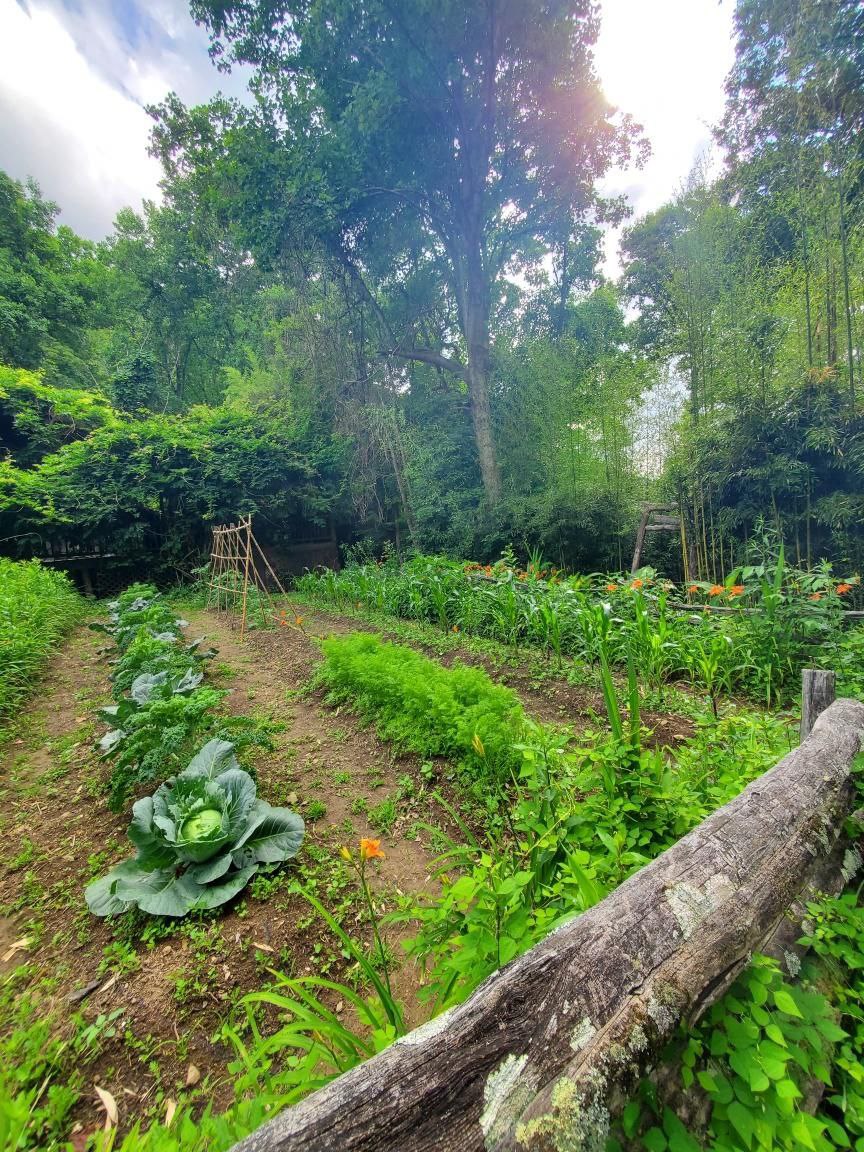
Landscaping remained ongoing. Bamboo and English ivy were carefully managed to form a serene bamboo forest greeting visitors. And the adventure continues—as of this writing in December 2022.
The Magic of Mountain Light Sanctuary
Woodfired Sauna & Bathhouse
We have a beautiful 6-person woodfired sauna, offer bodywork, and other services
Teahouse & Gift Shop
Beautiful teahouse overlooking the Japanese garden with locally crafted gifts (Coming Soon)
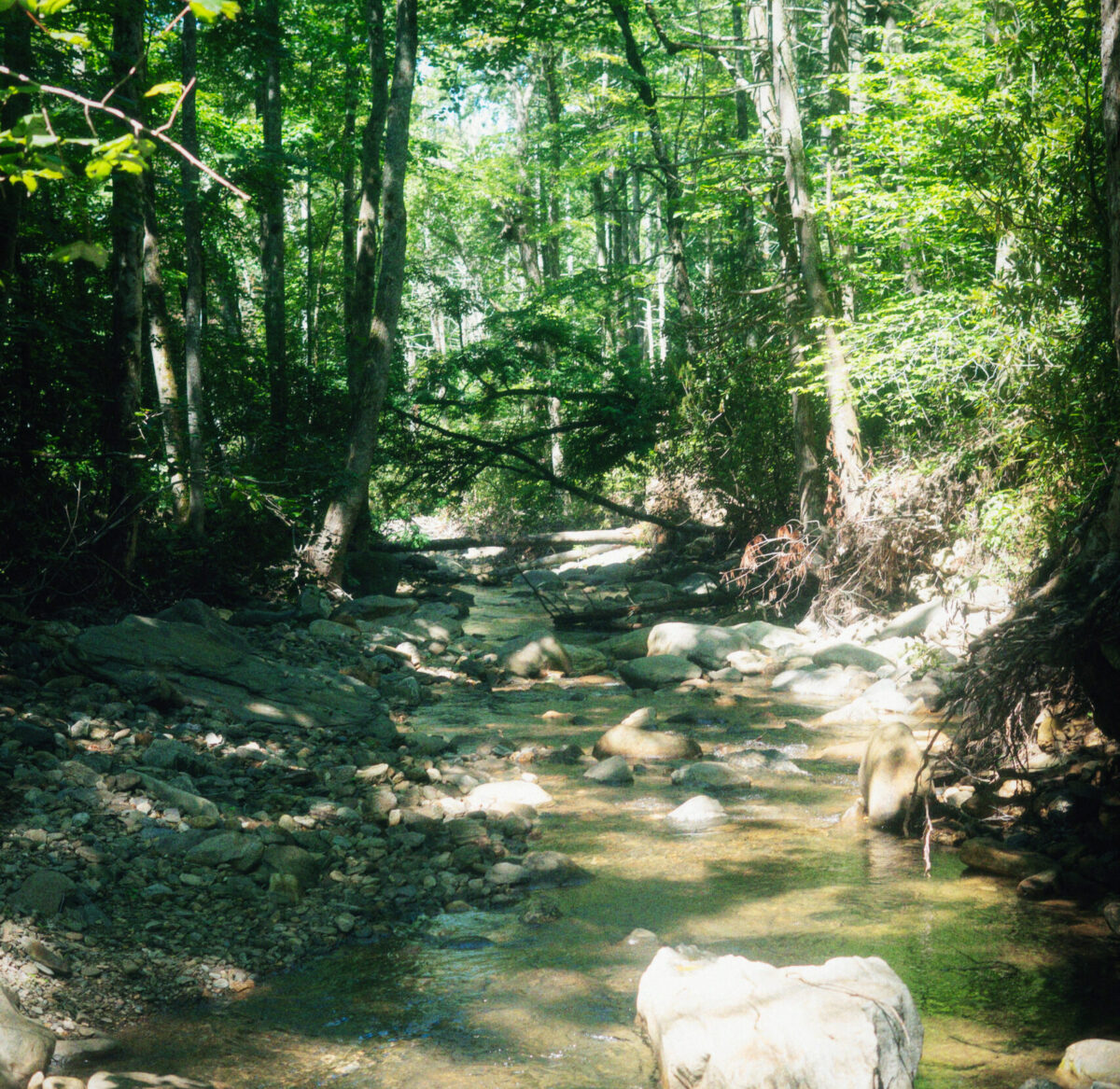
Beautiful Flowing Creek Parallel to the Property
Wifi & Internet
Council House Fire Pit
Large fire pit and round seating in our Council House
Main Lodge with Full Kitchen
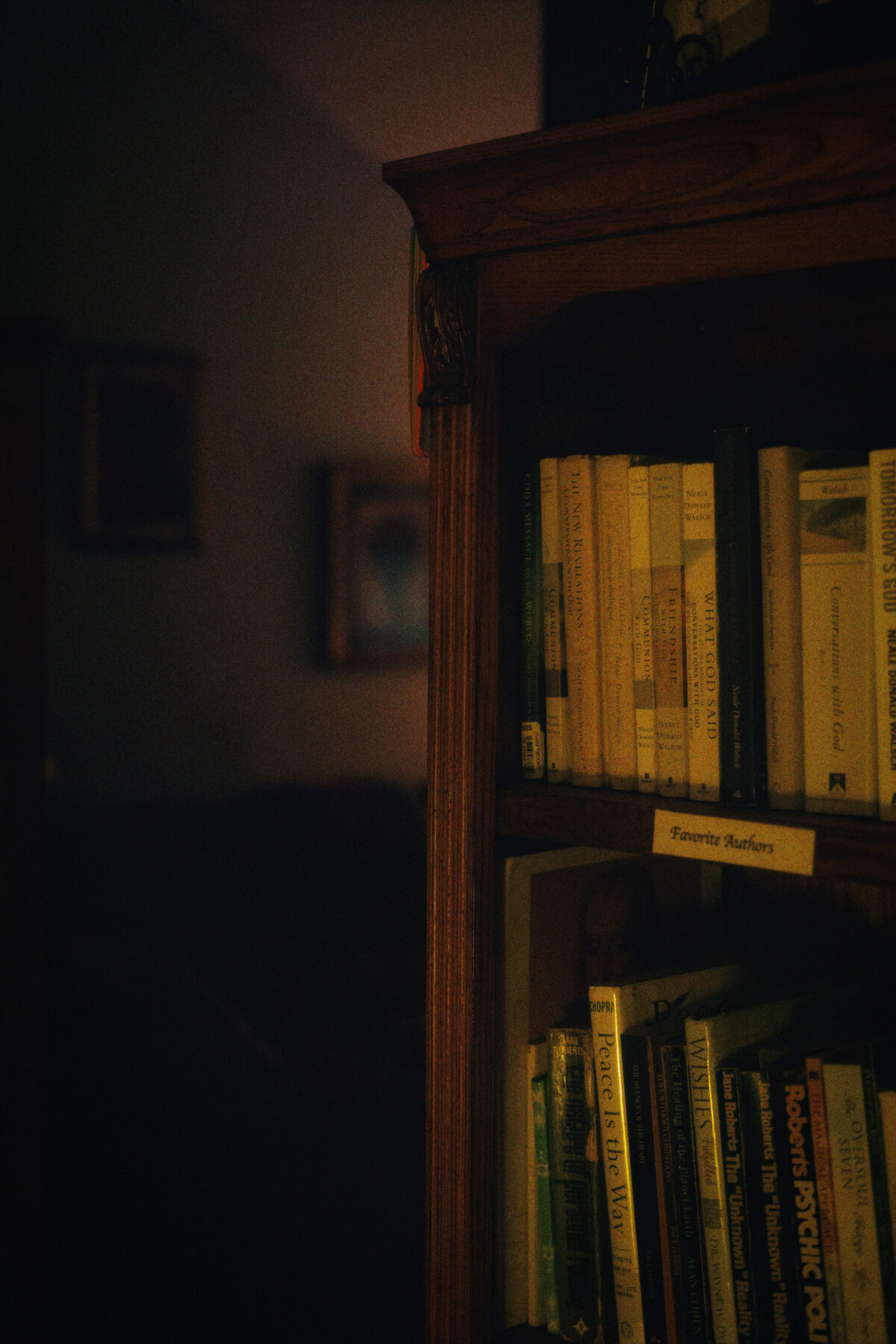
Lodge with indoor and outdoor full kitchen space and community library